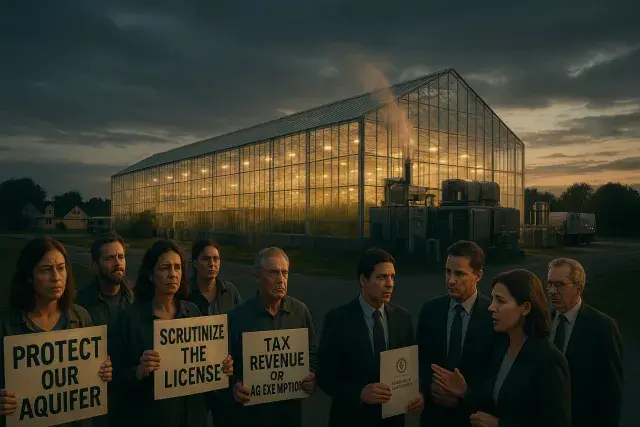
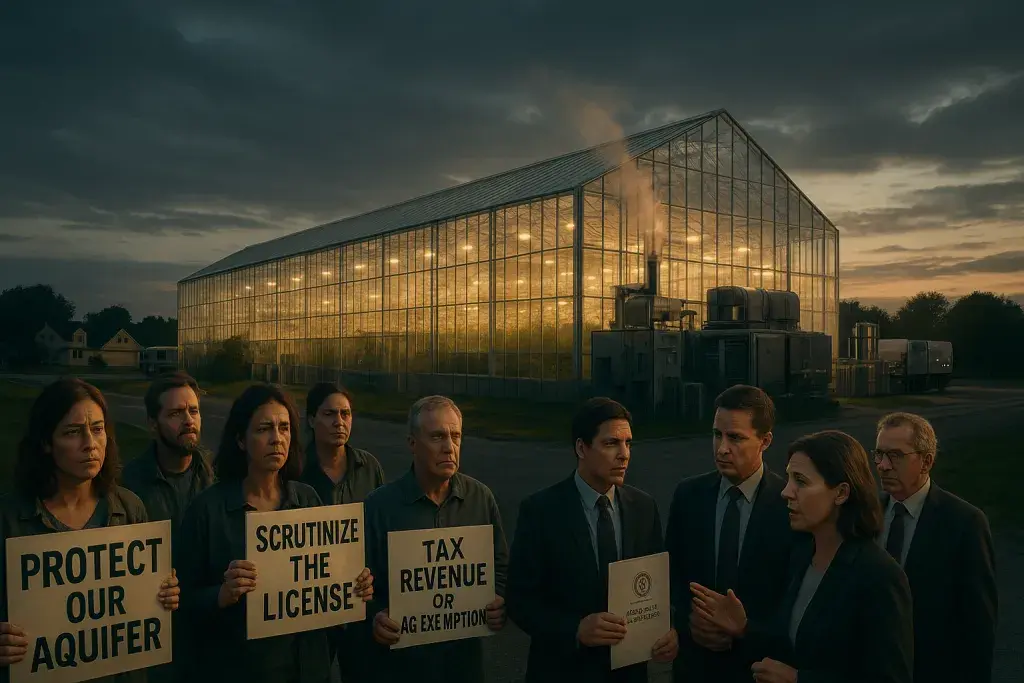
A proposed 31,000-square-foot cannabis cultivation facility in Calverton, New York has drawn sharp opposition from area residents, exposing the kind of local friction that licensed cannabis operators increasingly face when siting large-scale production infrastructure in or near residential zones. The project, associated with an LLC operating as Brother Bear Cannabis, has prompted formal objection to the Riverhead Town Board - and the complaints raised go well beyond aesthetics. They cut to the core of what regulated cannabis development actually costs a community, and what responsible municipal oversight should look like before a shovel hits the ground.
The Siting Problem Cannabis Operators Routinely Underestimate
Here's the thing about large-scale cannabis cultivation: the facility requirements are genuinely intense. Commercial greenhouse operations of this size typically run HVAC systems continuously, require significant water draw, generate delivery and freight traffic, and depend on generator backup systems to protect multi-million-dollar crop inventories in the event of a power outage. None of that is unusual in this industry. What is unusual - or should be - is siting that infrastructure adjacent to low-density residential neighborhoods without a thorough, publicly transparent review of its operational footprint.
The residents' concerns about noise from exterior HVAC units, diesel generator emissions, aquifer draw, and leachate risk are not unfounded. Cannabis cultivation at commercial scale produces real environmental externalities. These aren't hypotheticals invented by opponents - they are operational realities that any credentialed cultivation facility planner has to account for in a serious permitting process. Whether the Riverhead Town Board applied that level of scrutiny is exactly the right question to be asking.
LLC Transparency and Licensing Are Legitimate Public Concerns
Residents have also raised questions about the actual ownership behind the LLC and the status of the underlying cannabis license. Those questions deserve a straight answer from the relevant licensing authority - in New York, that would be the Office of Cannabis Management. Under New York's Cannabis Law, license applicants are required to disclose principals and ownership structures as part of the application process. That information, once a license is issued, is generally a matter of public record.
What's striking here is that these are exactly the kinds of questions regulators designed the licensing process to answer. Who controls the entity? Is the license active and in good standing? Has the applicant met conditional requirements? If the town board is unable - or unwilling - to provide that clarity to residents, something in the public process has broken down. Opacity around cannabis licensing doesn't serve operators, regulators, or communities. It breeds exactly the kind of distrust on display in Calverton right now.
The Tax Argument Cuts Both Ways
Some town board members have cited tax revenue as justification for approving cannabis development. That's a reasonable starting position - regulated cannabis businesses do generate excise tax, sales tax, and local business tax receipts in most jurisdictions. But the residents raise a counterpoint worth examining: if the operation qualifies for agricultural tax status, the net local tax contribution could be substantially reduced, potentially to a figure lower than what individual residential landowners in the same area pay.
Agricultural exemptions for cannabis cultivation remain a genuinely contested area in many states. Whether a cannabis greenhouse qualifies as an agricultural operation for tax purposes depends on state statute and local assessor interpretation - and it isn't settled uniformly. Operators pursuing ag-tax classification aren't doing anything improper by seeking it; it's rational tax planning. But municipalities that approve cannabis facilities on the premise of revenue generation, without first confirming the tax classification that will actually apply, are making a promise they may not be able to keep. That's a planning failure, not an operator one - but it's a failure with real consequences for the communities that end up absorbing the infrastructure costs.
What This Means for Operators and Municipal Partners
For cannabis operators eyeing rural or semi-rural sites - particularly in states like New York where the licensing and municipal approval processes overlap in complicated ways - the Calverton situation is a useful case study in what not to do. Community relations in cannabis siting are not a formality. They are a material business risk.
Facilities that enter a market without proactive community engagement, transparent ownership disclosure, credible environmental mitigation plans, and honest conversations with local boards about infrastructure impact tend to generate exactly this kind of organized opposition. And organized opposition can delay or kill a project far more effectively than a licensing denial ever could. In a capital-intensive sector where a cultivation buildout of this size represents a multi-million-dollar commitment, that's an exposure no operator should take lightly.
To put it plainly: the legal right to hold a cannabis license does not automatically confer the social license to operate wherever the map permits. Earning that requires work that happens well before the permit application is filed.