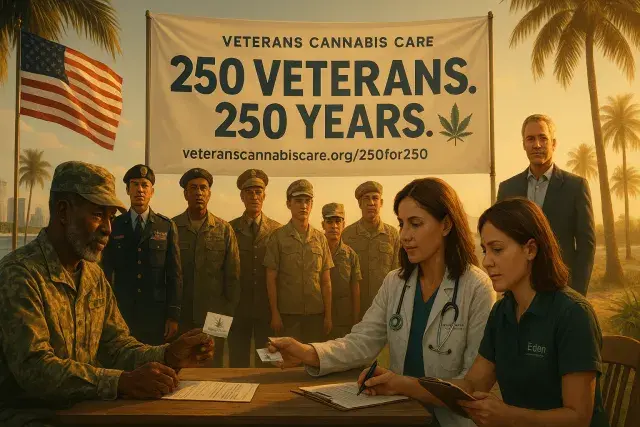
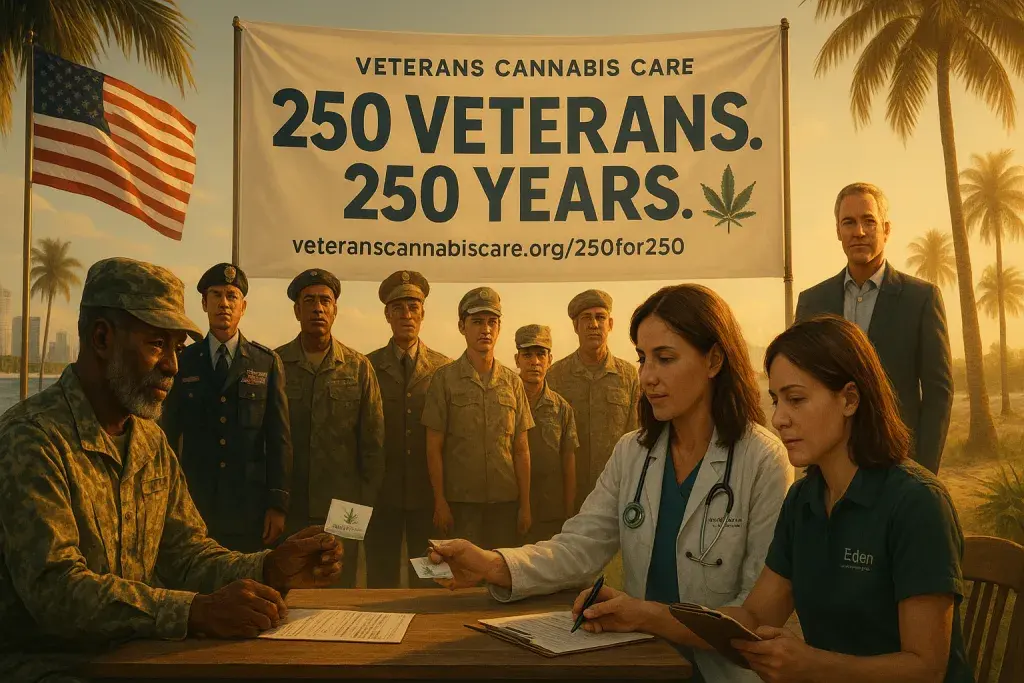
A Florida-based nonprofit is using the nation's 250th anniversary as the organizing principle for a concrete access program - not a ceremony. Veterans Cannabis Care (VCC) announced the "250 Veterans. 250 Years." initiative, a statewide campaign that will cover 100% of the costs associated with obtaining a Florida medical cannabis card for 250 qualifying veterans, running August 1 through a series of events across Sarasota, Tampa, Orlando, Cocoa Beach, and Casselberry over eight weeks. The math is intentional: one veteran honored for each year of American independence.
The cost structure matters here. Obtaining a medical cannabis card in Florida involves a physician evaluation fee, a state application fee, and - for many veterans - transportation and scheduling hurdles that compound the financial barrier. For veterans on fixed incomes or navigating VA-administered care, those upfront costs can be enough to close the door entirely. Access programs built around this model exist in other states too; operators running a cannabis retail platform for Missouri, for example, know firsthand how state-by-state licensing and cost structures shape who actually gets through the door and who doesn't. VCC's approach is direct: fund the barrier, remove it, repeat.
Eden Curated Cannabis and Marijuana Express M.D. are the operational and funding partners. Together, the two organizations have committed more than $19,000 to cover evaluation and card costs for participating veterans. Marijuana Express M.D. handles the physician evaluation side; Eden Curated Cannabis brings the dispensary-side knowledge of what licensed access actually looks like on the ground. That kind of cross-sector partnership - a licensed dispensary operator and a physician evaluation service co-funding a patient access program - reflects a model that's become increasingly visible in states where medical cannabis programs have matured past the early-adoption phase.
Why the Access Gap Persists for Veterans
VCC has helped cover medical cannabis card costs for more than 1,000 veterans since its founding. The organization also maintains an active waiting list. That's not a minor footnote - it signals that demand for this kind of program consistently outpaces available funding, and that cost alone isn't the only obstacle.
VCC's founder, Robb Harmon, has identified the real cluster of barriers: financial cost, lack of program education, transportation logistics, social stigma, and the structural limitations of traditional health care systems - particularly the VA, which operates under federal restrictions that prevent it from recommending or facilitating access to a Schedule I substance, regardless of state law. That federal-state disconnect has produced a situation where eligible veterans may qualify under state medical cannabis law, want access, and still have no institutional pathway to get there. Nonprofits like VCC are, in practice, filling a gap that federal health policy has left open.
Veterans seeking medical cannabis access in Florida most commonly do so for conditions including PTSD, chronic pain, sleep disorders, and anxiety - all service-related health concerns that the VA acknowledges but cannot address through cannabis-based options under current federal law. VCC doesn't make therapeutic promises. The organization's role is access, not outcomes advocacy.
What This Signals for Licensed Cannabis Operators
For dispensary operators and multi-state operators (MSOs) watching Florida, the VCC model raises a question worth sitting with: what's the business case for partnering with a patient-access nonprofit? Eden Florida's head of operations, Nelson Junco, was candid about it - supporting this kind of program was, in his words, "an easy decision." That framing matters. Community partnership at this scale serves multiple purposes for a licensed operator: it builds relationships with an underserved patient segment, demonstrates responsible retailing to regulators and local officials, and aligns brand presence with a program that carries genuine public legitimacy.
None of that is cynical. Florida's medical cannabis market is licensed and regulated, and operators working within it compete on patient acquisition, product mix, and store experience. Programs that reduce structural barriers to entry - evaluation costs, card fees, appointment access - expand the total addressable patient population. When a nonprofit removes the financial barrier for 250 veterans who might otherwise never enter the licensed program, those patients don't disappear after they receive their card. They become part of the regulated system.
VCC is actively seeking additional sponsors, donors, and community partners. Harmon's stated target isn't simply filling 250 spots - it's building enough institutional momentum to sustain and expand the program in future years. For operators, suppliers, or dispensary management companies considering community investment in a licensed medical cannabis state, this is the kind of program that demonstrates real alignment between commercial interests and patient access goals.
Registration and What Comes Next
Veterans interested in participating can register at veteranscannabiscare.org/250for250/. Events begin August 1 and run for eight weeks across five Florida markets. VCC expects all 250 spots to fill during the campaign period, given its existing waitlist.
The broader implication here is straightforward: in a regulated medical cannabis market, access isn't guaranteed just because the program exists. Cost, education, and geography shape who actually participates. Organizations willing to fund that last mile - and operators willing to partner with them - are solving a real operational problem inside the licensed system, not outside it.