J&J Snack Foods closed out its fiscal fourth quarter with a familiar split screen: margins moving in the right direction, retail and frozen beverage sales gaining ground, yet adjusted earnings and overall revenue still heading lower. The company's latest earnings call painted a picture of a business mid-transformation - further along than a year ago, but not yet fully out of the woods.
Where the Strength Actually Showed Up
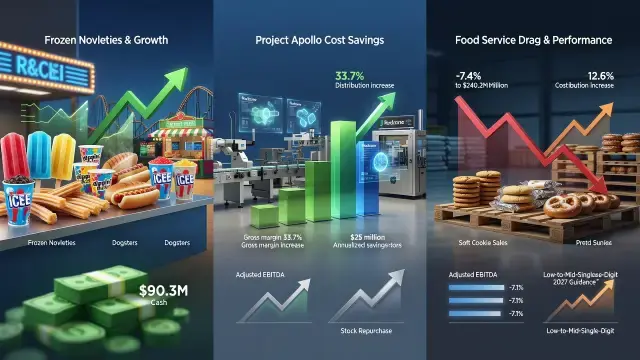
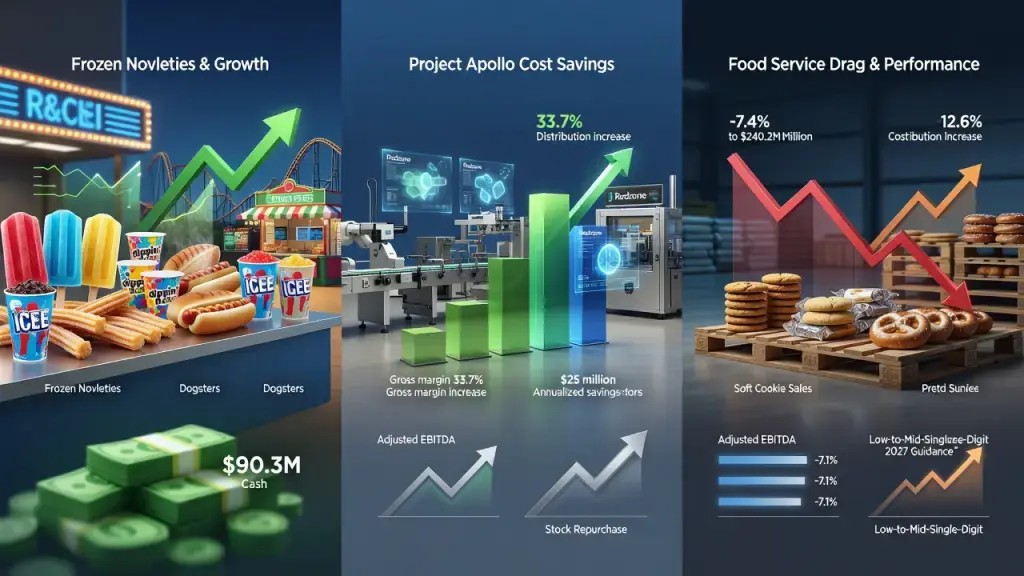
Gross margin widened 200 basis points to 33.7% in the quarter, with full-year gross margin up 210 basis points to 31.8%. That improvement traces largely to Project Apollo, the company's cost-reduction program, which hit its $25 million annualized savings target for the fiscal year - nearly $20 million of it realized within the period. Retail sales climbed 17.1% in the quarter, powered by frozen novelties, seasonal churros and standout performances from Dippin' Dots and Dogsters. Frozen beverage net sales rose 6.1%, with beverage dollar sales across theaters, amusement venues and convenience channels up 18.6%. In practice, these are the segments doing the heavy lifting while other parts of the portfolio lag behind.
Food Service Remains the Drag
Here's the catch: Food Service net sales fell 7.4% to $240.2 million, and segment operating income dropped more than 10%. Churro and pretzel gains - including a successful quick-service pretzel-bun promotion - weren't enough to offset continued softness in cookies and handhelds, including a major customer relationship that management expects to weaken further next year. Distribution costs rose 21.6% in the quarter, climbing to 12.6% of sales from 10.3% a year earlier, which ate into the gross-profit improvement before it could reach the bottom line.
Reading the Adjusted Numbers Correctly
Reported diluted EPS jumped to $1.80 from $0.58, but that swing was driven almost entirely by a nonrecurring insurance gain against prior-year plant-closure costs - not by underlying operating strength. Adjusted EBITDA tells the more honest story: down 7.1% in the quarter to $53.3 million, with adjusted EPS slipping to $1.39 from $1.58. Net sales dipped 1% to $406 million. Full-year adjusted EBITDA fell about 2.4%. None of this is catastrophic, but it does mean investors evaluating the quarter need to look past the headline EPS figure.
What the Guidance Signals for Next Year
Management is forecasting low- to mid-single-digit sales growth for fiscal 2027, built on core volume, innovation contributing roughly 1%, and pricing increases beginning in January - about 3% for ICEE and Dippin' Dots, roughly 2.5% companywide. Gross margin is targeted at 32% or higher. The company ended the year debt-free with $90.3 million in cash and repurchased $74 million of stock, giving it room to keep investing in manufacturing efficiency - including Redzone plant-floor systems and upgraded warehouse management tools - while still returning capital to shareholders. Ingredient inflation in packaging, shortening, oils and flour is expected to weigh more visibly in the second and third quarters, and distribution costs are likely to stay elevated before any second-half relief. Fair enough as a plan; whether it holds will depend on how quickly Food Service stabilizes.