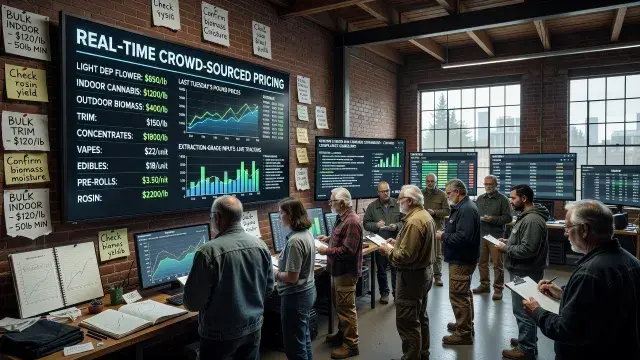
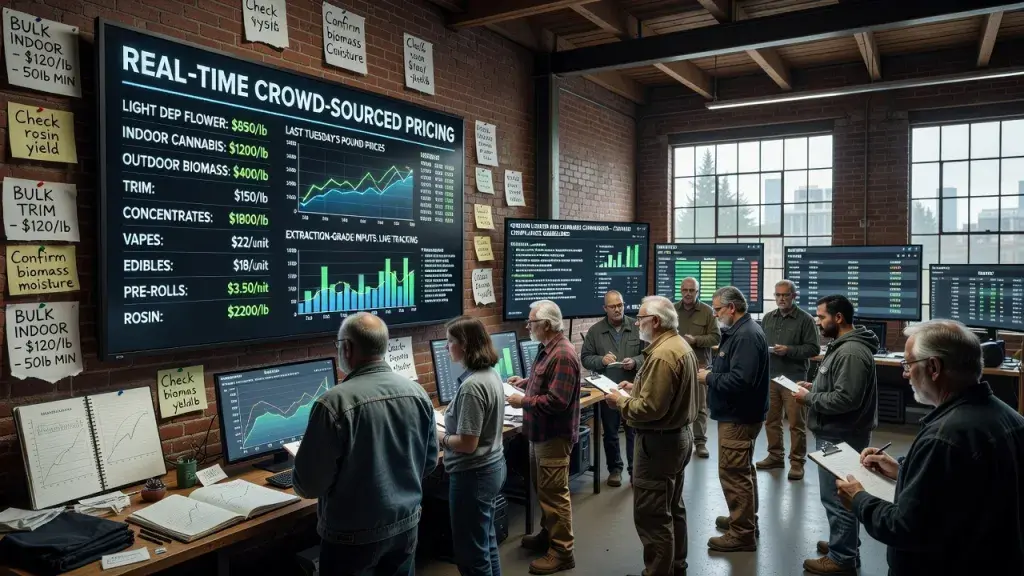
A veteran Oregon producer is proposing something the state's cannabis industry has lacked since adult-use sales began: a crowd-sourced, continuously updated picture of what flower, concentrates, and finished goods actually trade for in the wholesale market. The Oregon Liquor and Cannabis Commission publishes production and sales data, but it doesn't capture what a pound of light dep sold for last Tuesday or what a processor is paying per pound for biomass headed into extraction. That gap matters more than it might seem.
Why OLCC Data Only Tells Part Of The Story
Regulatory reporting exists to track compliance, tax liability, and seed-to-sale movement through METRC - not to function as a pricing index. That's a reasonable design choice for a regulator, but it leaves producers, processors, and retailers making purchasing and planting decisions with incomplete information. A farm deciding how much square footage to put into light dep for next season has no reliable benchmark beyond word of mouth and whatever wholesale menus happen to cross a broker's desk. In a market with no price floor and no central clearinghouse, that opacity has real financial consequences - it's part of what fueled Oregon's prolonged oversupply years, when nobody had a clear read on how much flower was actually sitting in vaults statewide.
What's Reportedly Changed In The Supply Chain
The proposal points to a few structural shifts worth taking seriously. First, consumer demand has moved substantially toward manufactured CPG products - vapes, edibles, pre-rolls, rosin - which pulls biomass away from the traditional dried-flower market and into fresh frozen and extraction-grade inputs. Second, the number of licenses on paper no longer reflects the number of farms in active, consistent production; attrition among cultivators has been real, even where license counts look stable. Third, the inventory backlog that depressed Oregon flower pricing for years appears to have substantially cleared, meaning current wholesale pricing reflects fresher supply rather than a market still working through old product. None of this is confirmed by independent data - it's informed observation from inside the trade - but it's consistent with patterns other mature cannabis markets have shown as they move past initial oversupply.
Why Wholesale Transparency Is A Compliance And Planning Issue, Not Just A Pricing One
Price discovery sounds like a purely commercial concern, but it intersects with compliance and tax exposure in ways operators don't always connect. Under federal tax code Section 280E, cannabis businesses can't deduct ordinary business expenses, which makes accurate cost-of-goods accounting - including what was actually paid for inputs like trim and biomass - more than a bookkeeping exercise. Reliable wholesale benchmarks help processors defend their COGS calculations and help producers model margins before committing capital to a harvest. For retailers, understanding where finished-goods pricing is landing across flower, vapes, and edibles informs purchasing decisions on wholesale menus and helps identify where customers are showing price resistance at the point of sale. None of that replaces OLCC's regulatory role; it supplements it with the operational detail regulators aren't positioned to collect.
What A Crowd-Sourced Market Check Can And Can't Do
A voluntary, operator-contributed price survey has obvious limits. It can't verify submissions, can't account for quality variance across cultivars, and will inevitably skew toward whoever is willing to talk publicly about their numbers. It also isn't a substitute for formal market research or audited transaction data. What it can offer is directional insight - a rough sense of where light dep, indoor, outdoor, trim, and concentrate pricing is actually clearing, as opposed to where asking prices sit on a wholesale menu. For a market heading into harvest, with outdoor flower volume still an open question, that kind of real-time signal - however informal - may be more useful to producers and processors than waiting months for the next round of official reporting.