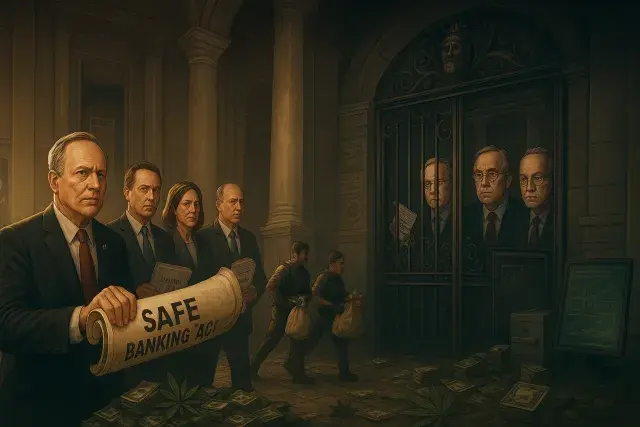
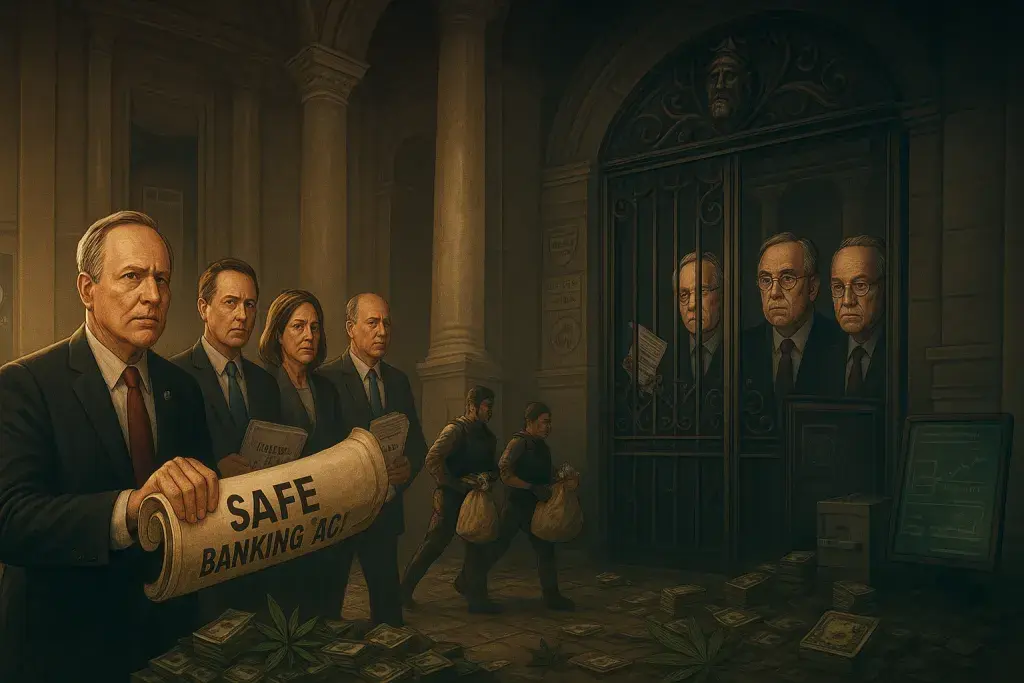
The SAFE Banking Act is back. Sen. Jeff Merkley filed the Senate version on June 24, and Rep. Dave Joyce led a bipartisan group of House members in filing the companion bill the following day - making this the latest chapter in what has become one of the longest-running legislative sagas in regulated cannabis. Bicameral and bipartisan support is real. So is the pattern of Senate inaction that has buried every prior version.
For dispensary operators, the stakes are not abstract. Running a cash-heavy business means higher armored-car fees, elevated shrinkage risk, employee safety concerns, and the kind of compliance friction that compounds every time a vendor, landlord, or payroll provider declines to do business with a plant-touching licensee. A New Jersey dispensary POS platform can track inventory and manage transactions at the store level, but no software solves the upstream problem: most banks still won't touch cannabis revenue, which means operators are left engineering workarounds that add cost and regulatory exposure at every step.
The bill's mechanics are worth understanding precisely. The 2026 version would bar federal regulators from penalizing or discouraging depository institutions for serving state-legal cannabis businesses, protect deposit insurance for those institutions, create a safe harbor from federal prosecution and asset forfeiture, and - significantly - extend that protection to ancillary service providers: landlords, accountants, software vendors, and other businesses that work adjacent to the industry without touching the plant directly. Suspicious activity report requirements remain intact; Bank Secrecy Act compliance doesn't disappear. The bill carves a safe harbor; it doesn't build a loophole.
Seven House Passes, Zero Senate Finishes
The history matters here because it shapes how seriously any operator should plan around this legislation. Some version of SAFE passed the House seven times between 2019 and 2022. Every time, it stalled in the Senate - first under Sen. Mitch McConnell, then under Sen. Chuck Schumer, who held out for comprehensive reform rather than an incremental banking fix. In 2022, the lame-duck session came and went without an NDAA attachment, without an omnibus rider, without anything. In 2023, the Senate Banking Committee actually advanced the retooled SAFER Banking Act out of committee - further than any prior Senate version had gotten - and it still went nowhere on the floor.
That's the record. Not a rough patch. A consistent, decade-long pattern of the Senate absorbing momentum and returning nothing. The bipartisan House coalition is genuine and has proven durable. The Senate is where this bill goes to wait.
What Rescheduling Changed - and What It Didn't
The move of state-licensed medical cannabis to Schedule III altered the banking calculus less than the headlines suggested. Rescheduling reduces legal risk at the margins; it does not hand financial institutions a federal safe harbor. Recreational operators - the majority of licensed adult-use dispensaries in states like Colorado, Michigan, Illinois, and California - remain fully in Schedule I territory for banking purposes. The resulting medical/recreational split actually complicates the compliance picture for multi-state operators running both license types, because the risk profile differs by product category and by customer. Compliance officers were right to keep waiting for either SAFE or updated FinCEN guidance before opening institutional accounts. Neither has arrived.
Rep. Joyce, co-chair of the Congressional Cannabis Caucus, framed the cash-only status quo as a public-safety problem - a framing that has worked well rhetorically across the aisle, because it's accurate. The American Bankers Association again applauded the reintroduction and urged Congress to act. That alignment between a cannabis caucus co-chair and a major banking trade group is not nothing. Whether it's enough to move Senate leadership is a different question entirely.
What Operators Should Actually Do with This Information
The honest answer is: watch, but don't restructure your business around passage. Operators who have built workarounds - cashless ATM systems, state-chartered credit union relationships, armored cash management protocols - should maintain those arrangements. The bill's ancillary-business coverage, if it passes, would matter enormously to the vendors, landlords, and professional service firms that currently price cannabis-client risk into their fees or decline the work altogether. That's a real and underappreciated cost center for most licensed retailers.
The rescheduling backdrop and a marginally friendlier executive posture toward cannabis banking may represent new variables. They are not guarantees. The Senate has stalled this legislation through multiple administrations, multiple majority configurations, and multiple rounds of industry advocacy. That doesn't mean passage is impossible - it means the prior versions of "this time feels different" have not aged well, and operators deserve forecasts grounded in the record rather than the mood of a given news cycle.
The SAFE Banking Act of 2026 is filed, it's bipartisan, and it's heading into the same Senate that has held it for the better part of a decade. That's the story, accurately told.