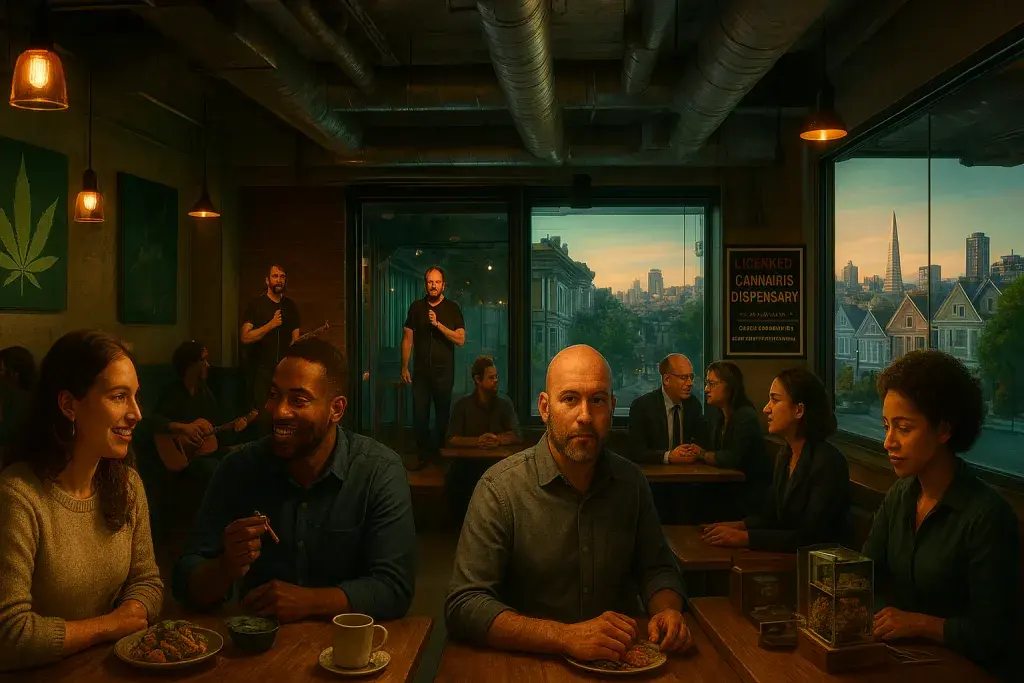
San Francisco's Board of Supervisors voted 7-4 on Tuesday to advance an ordinance that would allow licensed cannabis dispensaries to serve food and nonalcoholic beverages and host entertainment - a first reading that puts the city one vote away from permitting what many are calling Amsterdam-style cannabis cafes. A final vote is scheduled for next Tuesday. If the ordinance clears that hurdle, existing cannabis consumption lounge operators in the city will be eligible to expand their business models under a state law authored by Assemblymember Matt Haney.
For dispensary operators watching this closely, the business logic is straightforward: consumption lounges operating under current California rules are limited in how they can generate revenue beyond cannabis product sales. Adding food service and live entertainment creates new revenue lines - cover charges, food margins, ticketed events - that could meaningfully change a lounge's unit economics. That kind of diversification matters in a market where operators are under persistent pressure from high excise taxes, elevated real estate costs, and competition from unlicensed sellers. It's worth comparing, for example, how cannabis retail technology has had to adapt to different regulatory environments across the country - the operational requirements for a cannabis pos alaska system differ considerably from what a California consumption lounge would need to manage table service, entertainment ticketing, and compliant cannabis transactions under one roof.
Supervisor Rafael Mandelman, who proposed the ordinance in the spring, framed the change as both an economic survival tool for licensed operators and a potential draw for tourism. "Amsterdam does a lot of tourism business and has a lot of benefits from having the cannabis cafes," Mandelman said. "San Francisco is not Amsterdam; there may be elements of that that we're going to see out here, and again, that could be part of our recovery." He also said the measure could help struggling operators "find a more competitive business model to help them sustain themselves over time." That's not a small thing. Licensed cannabis retail in California has faced persistent margin compression, and any policy change that opens new revenue categories without adding significant compliance overhead deserves attention from operators across the state.
Operators Are Already Positioning for What Comes Next
William Dolan, CEO of Hyrba dispensary in the Sunset District, has been waiting for this legislation for nearly a decade. He's holding off on securing a building permit for a vacant space on Valencia Street in the Mission District until the ordinance passes. "We're looking to develop a space where people can socialize, relax, unwind, grab a bite to eat, have a snack, have a coffee and consume cannabis in a way where they're doing it legally," Dolan said. "They don't have to do it in their apartment, or they don't have to do it on the street."
That last point carries real policy weight. One consistent argument for well-regulated consumption spaces is that they provide a legal, controlled environment - with age verification, trained staff, and posted consumption rules - that street-level use doesn't. From a compliance standpoint, that's also a more defensible posture for operators: clear intake protocols, defined consumption zones, and separation of cannabis product sales from food service in the point-of-sale workflow. Building those systems correctly from the start will matter, particularly if the California Department of Cannabis Control or local regulators eventually issue specific operational guidance for combined-use venues.
The Public Health Objection Is Real and Won't Go Away
The 7-4 vote was not a rubber stamp. Supervisor Myrna Melgar voted against the measure, citing indoor smoking concerns directly: "What I don't like about this legislation is that it permits indoor smoking, and I think that is going backward on our public health goals." The Bay Area-based American Nonsmokers' Rights Foundation called the proposal "outrageous" and warned last month that workers - staff, musicians, comedians - would face "the difficult choice between their health and their paycheck" due to indoor air pollution.
That's a legitimate operational and legal exposure for prospective lounge operators, not just a political talking point. California's workplace air quality standards and labor protections don't simply evaporate because a venue holds a cannabis license. Operators who move forward will need to think carefully about ventilation engineering, employee disclosure agreements, and how their indoor air quality protocols hold up against state labor law. The workers' rights dimension - particularly as it applies to entertainment staff who are not cannabis employees - could generate regulatory scrutiny or litigation down the line. Building out a consumption cafe without a clear answer to those questions isn't a business plan; it's a liability.
What This Means for Licensed Operators Beyond San Francisco
San Francisco isn't the first California jurisdiction to consider this model, and it won't be the last. The state law enabling consumption lounges has been on the books, but local implementation has moved slowly - and unevenly. What happens in San Francisco tends to draw attention from regulators and operators in other California cities deciding whether and how to build out their own lounge frameworks.
For multi-location operators, real estate developers eyeing cannabis-adjacent commercial space, and point-of-sale vendors whose software would need to handle hybrid food-and-cannabis transactions, the direction of travel is worth tracking carefully. The final vote next Tuesday will determine whether San Francisco's operators can actually begin building toward this model - or whether the ordinance stalls and the clock resets. Either way, the debate has put a sharper edge on a question the California cannabis industry has been circling for years: what does a sustainable, differentiated licensed retail experience actually look like, and who gets to build it?