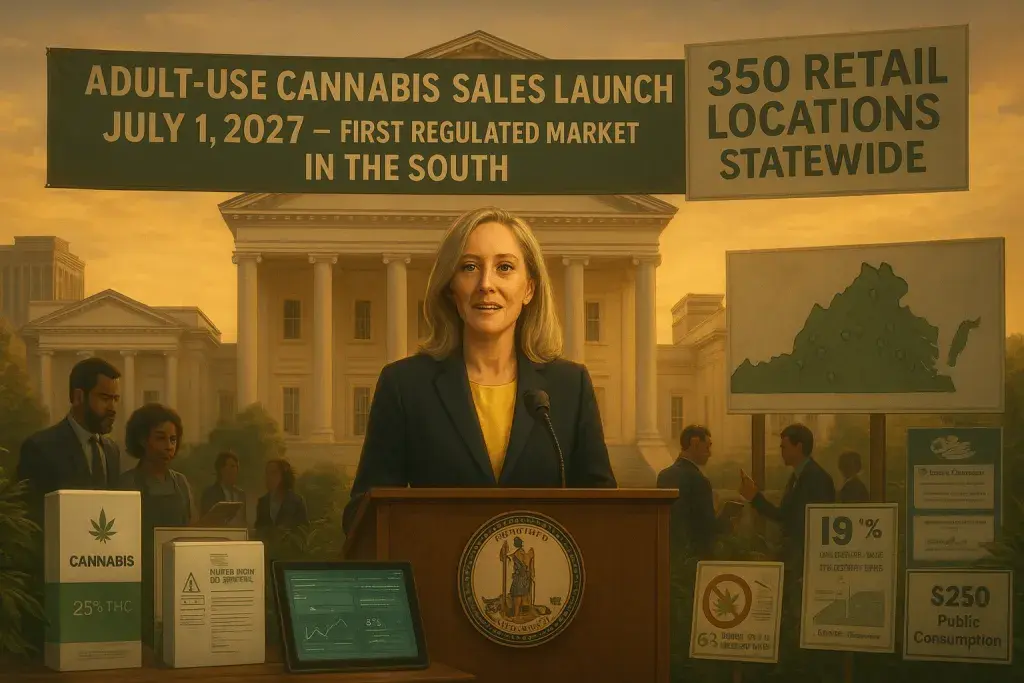
Virginia has reached a budget compromise that clears the way for adult-use cannabis retail sales to begin July 1, 2027 - ending a years-long stalemate and positioning the Commonwealth as the first state in the South to open a regulated marijuana marketplace. Gov. Abigail Spanberger and state lawmakers announced the deal Tuesday after a standoff that had nearly derailed the entire effort, including a shock veto last month that sent both sides back to the table. The resolution came through the state's budget process, which represented the last practical window for getting sales off the ground next year.
The path to this agreement reflects how politically tangled cannabis retail licensing can get, even after legalization clears the first hurdle. Virginia decriminalized and then legalized adult-use cannabis in 2021, but four years passed without a functioning commercial market - largely due to opposition from former Gov. Glenn Youngkin. States that have moved faster, like Colorado and Illinois, offer a useful contrast: their retail infrastructure was built incrementally, and early operators benefited from first-mover positioning that took years to replicate. Operators building out retail technology stacks in newer markets - whether evaluating dispensary software alaska deployments or platform choices in the mid-Atlantic - know that the window between licensing and launch is short, and the compliance build-out is not. Virginia operators will have roughly five months between the first application date of Feb. 1, 2027, and the retail sales launch, which is not a wide runway.
The deal's key parameters define what the market will actually look like at launch - and what it won't. The state will cap retail locations at 350 statewide, a number that split the difference between lawmakers' original 350-store proposal and Spanberger's counter of 250. The initial excise tax rate is set at 6%, rising automatically to 8% on July 1, 2029. Localities can add between 1% and 3.5% on top of existing sales and use taxes. That blended tax burden, depending on municipality, could push effective rates toward double digits - a real consideration for pricing strategy and competitive positioning against the legacy market. The deal also closes what the governor's office described as a "hemp loophole" that had allowed high-THC products to circulate in Virginia with minimal oversight.
Who's Already in the Room - and What That Means for New Entrants
Here's the catch for anyone hoping to enter the Virginia market fresh: the only licensed cannabis operators currently in the state are the five holders of vertically integrated medical cannabis permits. Two of those permits are held by affiliates of the same Boston-based investment fund. That's a concentrated starting point. Vertically integrated operators control cultivation, processing, and retail under a single license structure - which gives them a significant cost-of-goods and operational advantage over standalone dispensary applicants who will need to build wholesale relationships from scratch. Whether those existing operators will face a conversion fee to participate in adult-use sales, and what social-equity provisions will look like in practice, had not been disclosed as of Tuesday's announcement. Those details matter enormously. Social-equity licensing frameworks in markets like Illinois and California have been notoriously difficult to execute well, and Virginia will be under pressure to demonstrate it learned from those precedents.
Tax Structure, Packaging Rules, and Compliance Obligations
The regulatory framework coming into focus includes restrictions on edibles and packaging - details that will directly affect wholesale buyers, brand suppliers, and any multi-state operator looking to bring existing SKUs into Virginia. Compliant packaging requirements typically dictate child-resistant closures, opaque materials, accurate labeling with potency data supported by a certificate of analysis, and strict limits on imagery and claims. The advertising restrictions embedded in the deal add another layer; operators who have run marketing programs in other adult-use states will need to review their materials against Virginia-specific rules before launch. Getting that wrong isn't a minor error - it's the kind of violation that can surface in a license renewal review.
The $250 fine for public consumption - included in Spanberger's earlier proposal and a point of concern for advocates - appears in the final compromise. That's a consumer-facing compliance point, but it's also an operational signal for retail staff training: budtenders and floor staff will need to communicate purchase limits, consumption laws, and safe storage practices accurately and consistently. Medical sales through May 2026 reached $75.2 million, according to the state Cannabis Control Authority - a meaningful baseline that suggests genuine patient demand, but one that will look modest against projections for a fully open adult-use market in a state of Virginia's population.
What Operators Should Be Doing Right Now
For dispensary operators, investors, real estate brokers, and technology vendors with eyes on Virginia, Tuesday's announcement starts the clock - but the work starts before February. License caps matter. At 350 locations statewide, Virginia's market will not be an open field; early applicants with strong real estate positions, compliance documentation, and operational infrastructure will have a structural advantage. Zoning approvals in Virginia localities have historically been contentious, and many municipalities will use the 1%-to-3.5% local tax add-on as both a revenue tool and a negotiating point in the permitting process. Build that into the financial model now, not after the lease is signed.
Point-of-sale systems, seed-to-sale tracking integration, and inventory management platforms will need to be configured for Virginia's specific regulatory reporting requirements before the first product moves. State regulators typically mandate METRC or a comparable track-and-trace system, and any POS vendor pitching Virginia operators should be able to demonstrate that integration in a live environment. The five-month gap between application availability and sales launch sounds short. In practice, for a new licensee stood up from scratch, it's very short. The operators who treat this as a logistics problem starting today will be better positioned than those who wait for the license to arrive before opening the compliance checklist.