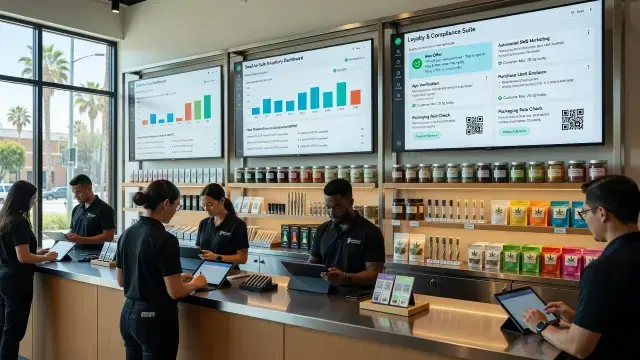
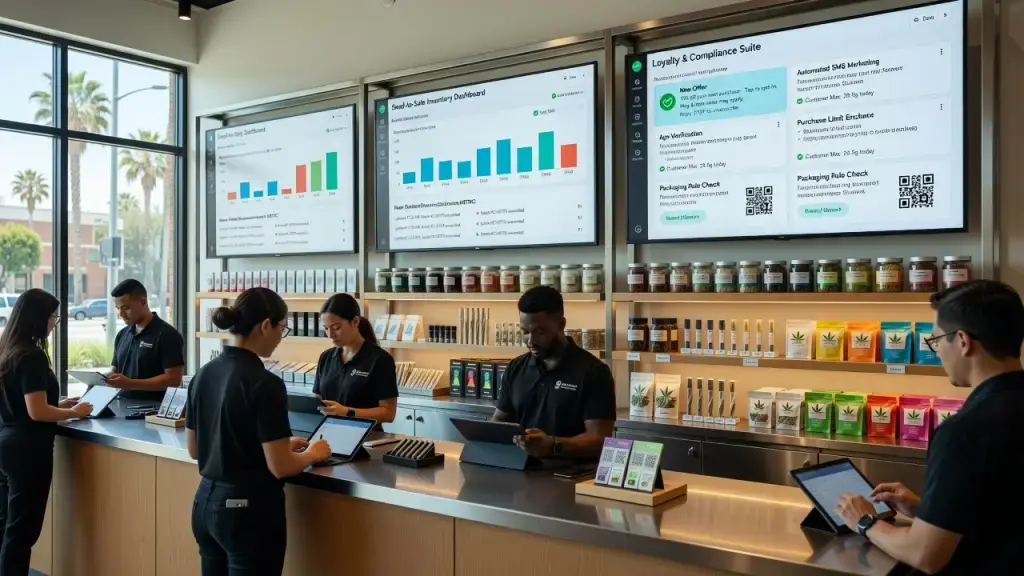
Cannabis retailers are running leaner than most regulated businesses, and the software stack behind the counter has become one of the few places left to claw back margin. Platforms like Meadow and Sweed are betting that dispensaries don't want a pile of disconnected tools - they want one system that handles point of sale, compliance, inventory and marketing without forcing a store manager to reconcile five different dashboards at closing time.
Why Fragmented Systems Are a Real Cost Center
Here's the catch with running separate point-of-sale, loyalty, and inventory tools: every integration gap is a place where data can drift. A budtender rings a sale, but if that transaction doesn't sync cleanly with seed-to-sale tracking, the store is suddenly exposed on a compliance log it didn't know was wrong. Multiply that across a multi-location operator with dozens of SKUs and rotating product batches, and inventory shrinkage stops being a rounding error - it becomes a line item finance has to explain. Consolidated platforms that connect POS, online ordering, delivery manifests, and reporting into one system are, in practice, an attempt to close that gap before it costs a license.
Compliance Isn't Optional, It's Structural
California dispensaries operate under layered state and local rules, and software built for the category is expected to enforce those rules automatically rather than leave it to staff memory. That means purchase limits, age verification, packaging checks, and reporting tied to state traceability systems need to be built into the workflow itself - not bolted on after a regulator flags a problem. Meadow's emphasis on compliant workflows across its POS, delivery, and pickup channels reflects a broader shift in the industry: compliance has moved from a back-office function to a front-of-house requirement baked into every transaction.
- Point-of-sale systems must reconcile with state traceability platforms in near real time
- Age and identity verification needs to happen consistently across in-store, delivery, and online channels
- Inventory reporting and compliant packaging checks reduce exposure during audits
- Loyalty and marketing tools must still respect advertising and consumer-protection restrictions
Marketing Under a Narrower Set of Rules
Cannabis retailers can't advertise the way a conventional retail brand does. SMS, MMS, and loyalty programs have become the workhorses of dispensary marketing precisely because they operate inside a channel the retailer controls directly, rather than relying on broader advertising placements that carry more regulatory risk. That's not a small technical detail - it shapes how operators think about customer retention in a market where foot traffic is inconsistent and price competition from unlicensed sellers remains a background pressure. A connected rewards system tied directly to point-of-sale data lets a dispensary see which promotions actually move inventory, instead of guessing.
What Consolidation Means for Operators
The appeal of an all-in-one platform is straightforward: fewer vendor contracts, fewer integration failures, one source of truth for inventory and sales data. The tradeoff is real too - operators become more dependent on a single vendor's uptime, support quality, and roadmap. For a sector already managing thin margins under 280E tax treatment and limited access to traditional banking, that dependency is a tradeoff worth weighing carefully, not a reason to avoid consolidation outright. Platforms offering public APIs, as Sweed does for custom storefronts, give operators at least some room to build around the core system rather than being fully locked into one vendor's interface.
None of this changes the underlying reality facing dispensary operators: regulatory scrutiny is constant, margins are tight, and consumer safety obligations don't pause for a software migration. The tools matter less than the discipline behind using them correctly.