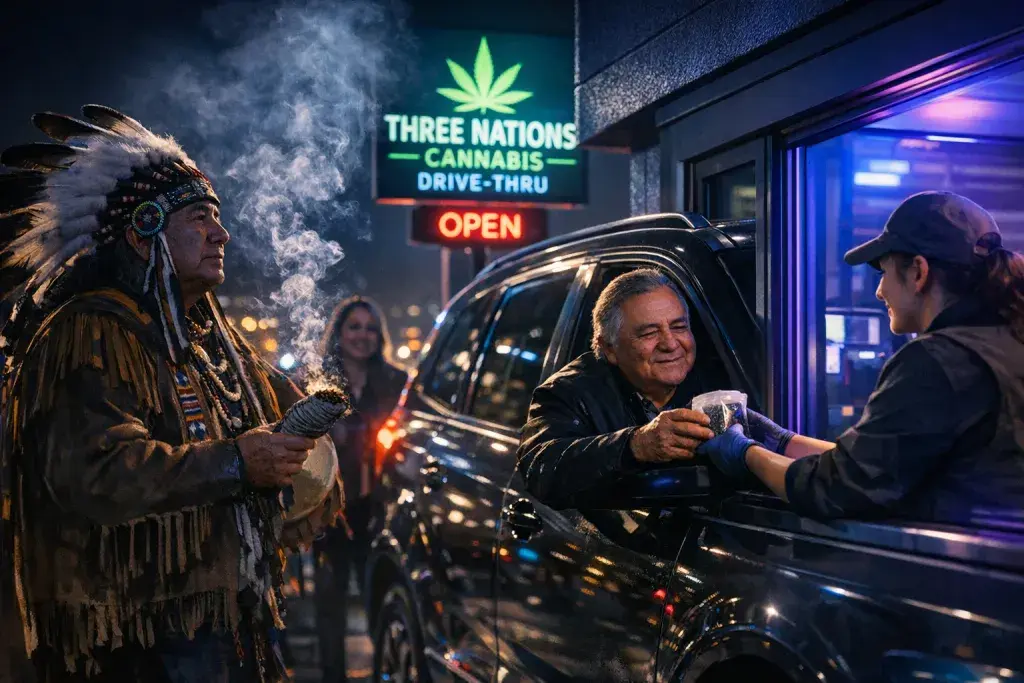
Reno-Sparks Indian Colony opened Three Nations Cannabis, the city's inaugural drive-thru dispensary, on Saturday with a traditional blessing featuring tribal prayers and music. Tribal Chairman Arlan Melendez made the first purchase—a cream for shoulder pain—marking a key step in the tribe's economic expansion. Local leaders, including Reno Mayor Hillary Schieve and City Council member Naomi Duerr, attended the soft opening at the 12,000-square-foot facility on South Virginia Street.
Tribal Ownership Drives Economic Diversification
Three Nations Management Corporation, fully owned by the Reno-Sparks Indian Colony (RSIC), operates the dispensary. This federally recognized tribe, comprising Paiute, Shoshone, and Washoe descendants, uses sovereign authority to enter the cannabis market outside state regulatory frameworks. Melendez stated the venture supports RSIC's strategy to create well-paying jobs for tribal members and others, while funding elder care, education, health services, housing, infrastructure, language preservation, culture, and youth programs.
Strategic Locations and Phased Rollout
Situated in a former Infiniti dealership at 11570 S. Virginia St., the site currently serves customers via drive-thru lanes only; the indoor retail space opens in April. A second RSIC drive-thru dispensary occupies a repurposed Taco Bell near Gold Ranch in Verdi, set for March 12. Plans include a third in Spanish Springs, though no date is confirmed. These sites build on the tribe's established Tribal Smoke Shop operations, positioning cannabis sales near high-traffic areas.
Broader Implications for Tribal Sovereignty and Local Economy
Tribal cannabis businesses like Three Nations reflect a growing trend where Native nations leverage federal recognition to pursue economic independence amid varying state legalization landscapes. Such enterprises generate revenue streams insulated from some state taxes, enabling reinvestment in community needs. In Nevada, where recreational cannabis has operated since 2017, tribal ventures complement the market while asserting self-determination, potentially fostering jobs and cultural continuity through initiatives tied to proceeds.