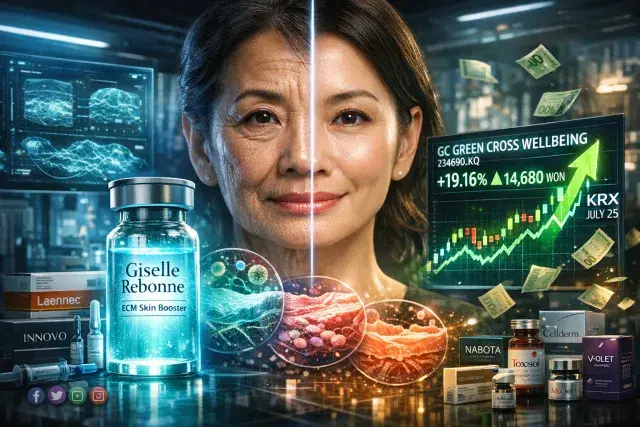
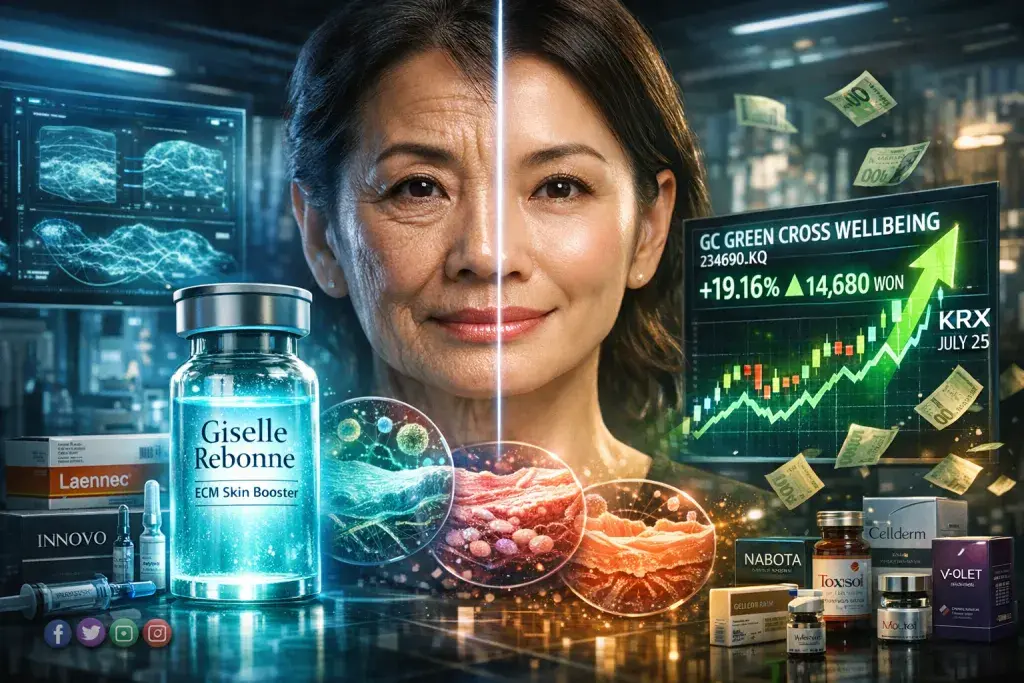
On July 25, shares of GC Green Cross Wellbeing (234690.KQ) rocketed 19.16% to close at 14,680 won on the Korea Exchange, fueled by the company's announcement of its new human tissue-based extracellular matrix (ECM) skin booster, Giselle Rebonne. This surge underscores surging investor confidence in innovative regenerative aesthetics amid booming demand for advanced skin rejuvenation treatments.
Giselle Rebonne: A Leap in Skin Regeneration Technology
Giselle Rebonne represents a next-generation ECM skin booster derived from human acellular dermal matrix (hADM), processed to strip away cells and immune-triggering factors for superior biocompatibility. Unlike traditional skin boosters that merely stimulate collagen indirectly, this product delivers the ECM structure directly, fostering true tissue remodeling and structural restoration at the skin's foundational level.
- Developed with MS Bio's proprietary decellularization process to minimize rejection risks and inflammation.
- GC Green Cross Wellbeing oversees raw material supply via its Eumseong tissue bank.
- Offers regenerative effects beyond superficial hydration, targeting deeper skin health.
Portfolio Powerhouse in Aesthetic Medicine
This launch bolsters GC Green Cross Wellbeing's comprehensive aesthetic lineup, now spanning placenta injections like Laennec, dermal fillers, skin boosters, and botulinum toxin Innovo. The move mirrors competitive strategies, such as Hugel's co-promotion with Hans Biomed's Cellrderm ECM booster or CG Bio's planned bundling with Daewoong's Nabota and V-Olet, signaling a market shift toward integrated regenerative solutions.
In South Korea's hyper-competitive aesthetics sector—where non-invasive procedures dominate lifestyle trends—such expansions capitalize on rising consumer preferences for biocompatible, human-derived therapies over synthetic alternatives.
Implications for Investors and the Beauty Industry
The stock's sharp rally highlights ECM skin boosters' potential to disrupt the global aesthetics market, projected to exceed $20 billion by 2028, driven by aging populations and social media-fueled demand for natural-looking rejuvenation. For GC Green Cross Wellbeing, Giselle Rebonne positions it as a leader in tissue-engineered cosmetics, potentially unlocking premium pricing and export opportunities in Asia and beyond.
Yet, success hinges on regulatory approvals, clinical validation of long-term efficacy, and navigating ethical concerns around human tissue use. As regenerative medicine blurs lines between cosmetics and therapeutics, this innovation could redefine preventive skincare, empowering consumers with tools for sustained dermal vitality.