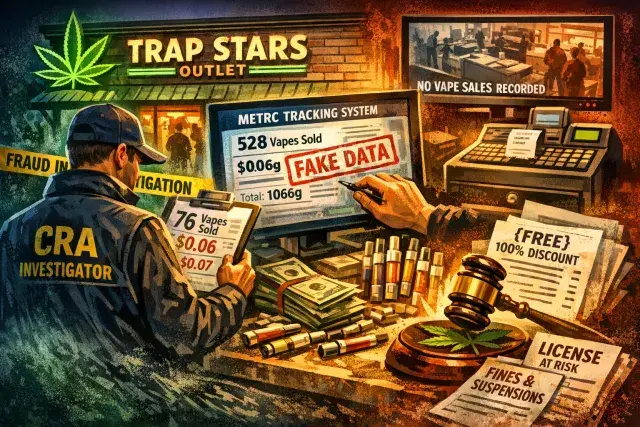
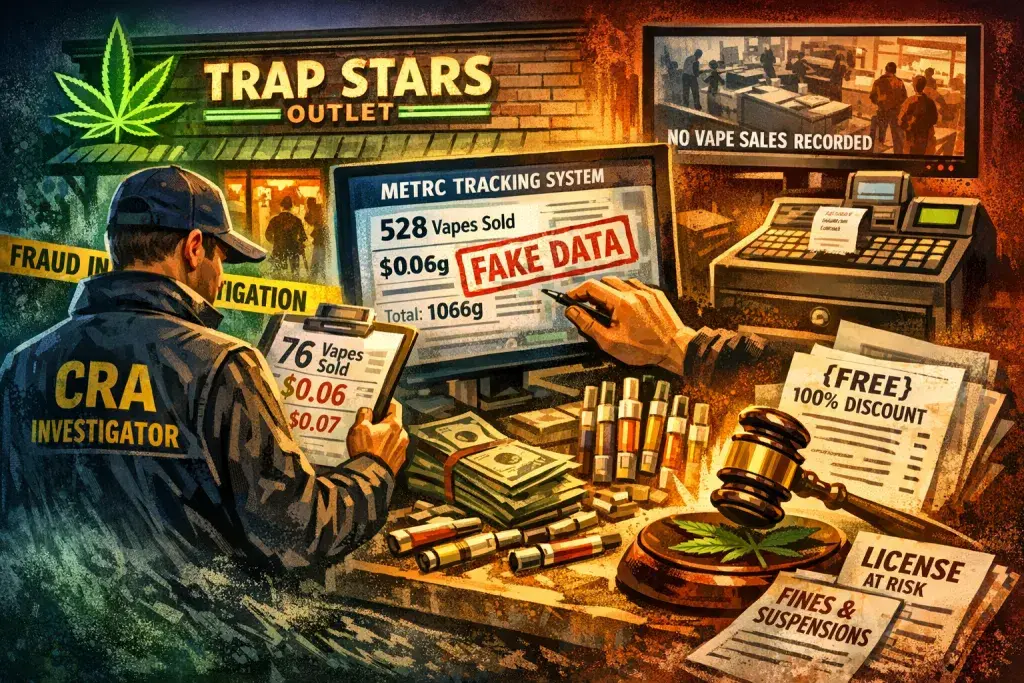
Michigan's Cannabis Regulatory Agency has lodged a formal complaint against the adult-use license of Trap Stars Outlet in New Buffalo, alleging the dispensary recorded hundreds of vape cartridge sales in the state's tracking system without matching point-of-sale evidence. The case centers on 528 MuhaMeds disposable vapes, totaling 1,056 grams of marijuana concentrate, logged as sold in 76 transactions over 44 minutes on September 30, 2025, each for mere pennies. This action highlights ongoing challenges in ensuring accurate tracking under Michigan's tightly regulated recreational cannabis market, where lapses can trigger fines, suspensions, or license revocation.
Discrepancies Emerge in Sales Data Review
The investigation began after a September 30 complaint prompted CRA agent review of Metrc records, Michigan's mandatory statewide monitoring system for cannabis inventory and sales. Metrc showed 76 sales between 9:56 a.m. and 10:40 a.m., with each receipt totaling $0.06 or $0.07. An October 8 site visit revealed stark mismatches: the general manager produced only one POS receipt for seven cartridges (14 grams), and surveillance video captured deli-style flower sales but no vape transactions matching Metrc logs.
Trap Stars later submitted partial POS data for 37 receipts, revealing identical customer and budtender IDs across 34 transactions totaling 237 vapes (474 grams). Codes like "(FREE) 100% DISCOUNT" appeared, but the company's sales SOP lacked procedures for such discounts, violating rules requiring detailed, compliant operating guidelines. Full receipts provided on November 13 confirmed 41 more transactions with the same IDs, showing minor excise tax discrepancies with Metrc.
Promotions Fail to Align with Internal Policies
The dispensary attributed the penny-priced sales to a promotion where vapes served as $0.01 promotional items tied to larger purchases, claiming transactions occurred on camera September 29-30. Yet no video or receipts corroborated this, and CRA found the practices contravened Trap Stars' own "DISCOUNTING & PROMOTIONAL GIVEAWAYS" SOP, submitted November 7. That document mandates clear receipt notation of promotions, discounts, and totals—without "penny out" or zeroing items absent a corresponding paid sale.
Manager statements insisted products left the facility under promotion rules, but lacked supporting evidence despite repeated CRA requests. Michigan's framework demands precise SOPs covering all operations, including promotions, to prevent diversion, overproduction, or black-market leakage—a core pillar since recreational sales launched in 2019 following voter approval in 2018.
Regulatory Violations and Potential Consequences
CRA cited breaches of Rule 420.104(3)(b), mandating accurate Metrc entry of all transactions and inventory, and Rule 420.206a(3), requiring up-to-date, compliant SOPs onsite. These rules underpin Michigan's 420-compliance model, designed to track every gram from seed to sale, curbing underage access and illicit trade in a market exceeding $3 billion annually.
Outcomes could include fines, restrictions, suspension, revocation, or non-renewal of license AU-R-001306. Formal complaints represent allegations, not proven violations; Trap Stars has not publicly commented. The case underscores pressures on retailers to integrate POS systems seamlessly with Metrc amid competitive promotions, as regulators intensify scrutiny to safeguard public safety and market integrity.